

| Population | 49,620 people |
|---|---|
| Area | 17.38 km² |
| Population density | 2,855 people/km² |
Shiogama City is a port town located almost in the center of Miyagi Prefecture, right between Sendai City and Matsushima, one of Japan’s Three Great Views. With a population of about 50,000, it occupies a unique position in the Tohoku region where urban convenience coexists with seaside living.
Although it is only about a 20-minute train ride from downtown Sendai, the atmosphere of the town is distinctly different. In the morning, trucks carrying fish from the port come and go; at noon, tourists line up at sushi restaurants; and in the evening, the sea breeze from the bay flows into the residential areas. The very structure of being a “fishing port city near the city” is what gives this town its unique character.
It is neither a mere bedroom community nor a tourist destination. Shiogama is a “town where the sea, faith, and food culture are woven into daily life.” Visitors can experience the “authenticity of a port town,” and residents naturally come to embrace a “life lived alongside the sea.”
[geo_affi_intro]
History
Shiogama’s history dates back to its role as “Kozu,” the port of the ancient Mutsu Province. During the Nara period, when Tagajo became the political and military center of Tohoku, the area around present-day Shiogama was developed as its outer port. In other words, this town served as the “gateway to Tohoku,” supporting national functions.
At the same time, Shiogama Shrine garnered devotion as the guardian deity of Mutsu Province, giving rise to a structure where the port and the shrine coexisted side by side. This structure, where a “logistics hub” and a “spiritual center” overlap, remains strongly evident in the town’s current streetscape.
During the Edo period, it developed as an outer port of the Sendai Domain and prospered as a hub for the distribution of goods. In the modern era, it grew into one of Tohoku’s leading logistics cities thanks to the development of railways and port facilities. After World War II, it developed with a focus on the fishing industry and became known nationwide as one of Japan’s leading ports for fresh bluefin tuna landings.
Although it suffered tsunami damage during the 2011 Great East Japan Earthquake, the port and the city have been rebuilt, and today they are returning to normal life while carrying the weight of their history. Walking through the streets of Shiogama, one notices how the ancient port, Edo-period faith, modern logistics, and recovery from the disaster all overlap along a single timeline.
Culture and Customs
Mornings in Shiogama start early. Around 5:00 a.m., market workers begin their day, and fish unloading starts at the port. The air, filled with the scent of the sea mixed with the sound of engines, is the very “sound of life” in this town.
The bounty of the sea naturally graces the dinner table. For example, tuna sashimi is often “fresh” rather than frozen; when you put it in your mouth, it’s tender, and the rich, iron-rich umami spreads throughout. Sasakamaboko is typically eaten lightly grilled, so the surface is fragrant and the inside remains fluffy.
The local dialect is similar to the Sendai dialect, characterized by soft endings like “~daccha” and “~dabe.” While the tone of speech is gentle, there is a down-to-earth friendliness unique to port towns, making people feel close even upon first meeting.
The seasons are clearly defined. In spring, the sea breeze softens, and in summer, the wind from the ocean often makes it feel cooler than inland. In autumn, the air is crisp, and in winter, cold sea winds blow in, but since it is not a heavy snowfall area, daily life remains manageable.
When you live in this city, “the state of the sea becomes a part of your life.” The direction of the wind, the scent of the tide, the seasonal availability of fish—the ability to naturally sense these things becomes deeply ingrained in your daily life.
[geo_affi_culture]
Local Specialties
Fresh Tuna
Characterized by a rich flavor without any wateriness and a melt-in-your-mouth texture. The peak season runs from fall through winter, when the fish achieves an exquisite balance of richness without being heavy.
It is typically eaten as sashimi, but when used in sushi, the umami is further enhanced by the combination with the warm rice. The biggest difference from other regions is that it is “fresh, not frozen.” This quality is made possible precisely because the port is so close.
The town has long developed as a port, and the extremely short distance from landing to distribution supports this quality.
Sasa Kamaboko
It has a mild, slightly sweet flavor with a concentrated umami from the fish. When grilled, the surface charred lightly while the inside remains fluffy and springy.
While available year-round, we recommend enjoying it freshly grilled on the spot when visiting. Skewered and lightly seared, it’s best eaten while still steaming hot, allowing the savory aroma and tender texture to spread across your palate simultaneously.
This dish developed in a region known for its thriving seafood processing industry and boasts the highest production volume in the country.
Local Sake (such as Urakasumi)
Many varieties offer a clean, refreshing mouthfeel with the rich umami of rice gradually spreading across the palate. A key feature is that the balance remains intact whether served chilled or warmed.
The peak season is from fall to winter. They pair exceptionally well with sashimi and sushi, and the combination with tuna is particularly outstanding.
It has a history of developing as a “sake to drink with fish,” closely tied to the food culture of this port town.
[geo_affi_product]
Relocation & Living Information
Many people commute to Sendai City, which takes about 20 minutes by JR. While the morning commute can be crowded, it is not as congested as in the city center.
Rent is lower than in Sendai City, with a 2-bedroom apartment typically costing around 60,000 to 80,000 yen. The area near the port is mostly flat, while residential areas extend into the hills.
For shopping, there are commercial facilities like Aeon Town, so daily life is convenient. On the other hand, large roadside stores are concentrated in the neighboring towns of Rifu and Tagajo, making car travel convenient.
Medical care is available at general hospitals, and access to medical facilities in Sendai City is also convenient. As a place to raise children, there are a sufficient number of schools, making it a stable environment for a suburban lifestyle.
This environment is ideal for “those who want to live by the sea while commuting to the city.”
[geo_affi_life]
Climate and Living Environment
The annual average temperature is approximately 11.8°C. While summer days can exceed 30°C, the sea breeze makes it feel somewhat milder. Winters can see temperatures drop below freezing, but snowfall is not heavy.
On winter mornings, the air is crisp and cold, and the wind grows stronger as you approach the harbor. Without gloves, your fingertips may feel a stinging cold.
Annual precipitation is approximately 1,175 mm. Rainfall is heaviest during the rainy season and in the fall, while winters tend to be dry. Heating is essential, but the burden of snow removal is much lighter than in heavy snowfall areas.
Another characteristic is how the “face of the sea” changes with the seasons: it is calm in summer, while rough days increase in winter. You can feel these changes as part of the everyday scenery.
[geo_affi_climate]
Regional Characteristics
Around Hon-Shiogama Station
Located in the city center, this area is home to a concentration of restaurants and commercial facilities. There are many sushi restaurants and a high volume of tourists. It is ideal for those prioritizing convenience.
Port Area
An area home to fishing ports and markets. It is characterized by its morning bustle, offering a sense of life closely tied to the fishing industry. Ideal for those who value the atmosphere of a port town.
Hilly Residential Area
A residential area spread across elevated ground. It offers a quiet and peaceful environment, making it suitable for families. It is also a popular choice for those concerned about tsunami risks.
Annual Events
- Shiogama Minato Festival (around July) – One of Japan’s three major boat festivals. The sight of portable shrines (mikoshi) aboard boats cruising around Matsushima Bay is truly spectacular. The sea breeze and the sound of taiko drums blend together, allowing you to experience the energy of the port town firsthand.
- Hote Festival (around January) – A heroic festival featuring portable shrines weighing nearly a ton. The chants echoing through the cold winter air are particularly memorable.
- Citizens’ Festival (around autumn) – A lively event where families gather to enjoy local food and culture. It’s the perfect way to get a feel for the local atmosphere.
[geo_affi_event]
Access
Tokyo → Sendai (Shinkansen, approx. 1 hour 30 minutes) → Shiogama (JR, approx. 20 minutes) Sendai Airport
→ Sendai Station (Access Line, approx. 25 minutes) → Shiogama (JR, approx. 20 minutes)
By car, it’s about 30 minutes from downtown Sendai. The typical sightseeing route is “Sendai → Shiogama → Matsushima,” allowing you to experience both the sea and history in a single day. It takes about 15 minutes
by car to reach the neighboring town of Rifu via Prefectural Route 3, and about 10 minutes to Tagajo City via National Route 45.
[geo_affi_access]
Sightseeing Spots
- Shiogama Shrine – A shrine located at the top of a long stone staircase. In the morning, it is enveloped in silence, and the light filtering through the trees creates a sacred atmosphere. The view of the town and the sea looking down from the shrine after your visit is breathtaking.
- Shiogama Seafood Wholesale Market – A market open from early morning. You can enjoy the experience of eating fish you’ve selected yourself right there on the spot, and the sound of knives and the lively atmosphere give you a true sense of a port town.
- Marine Gate Shiogama – The terminal where ferries depart for Matsushima. Standing on the deck and feeling the sea breeze, you can truly sense the beginning of your journey.
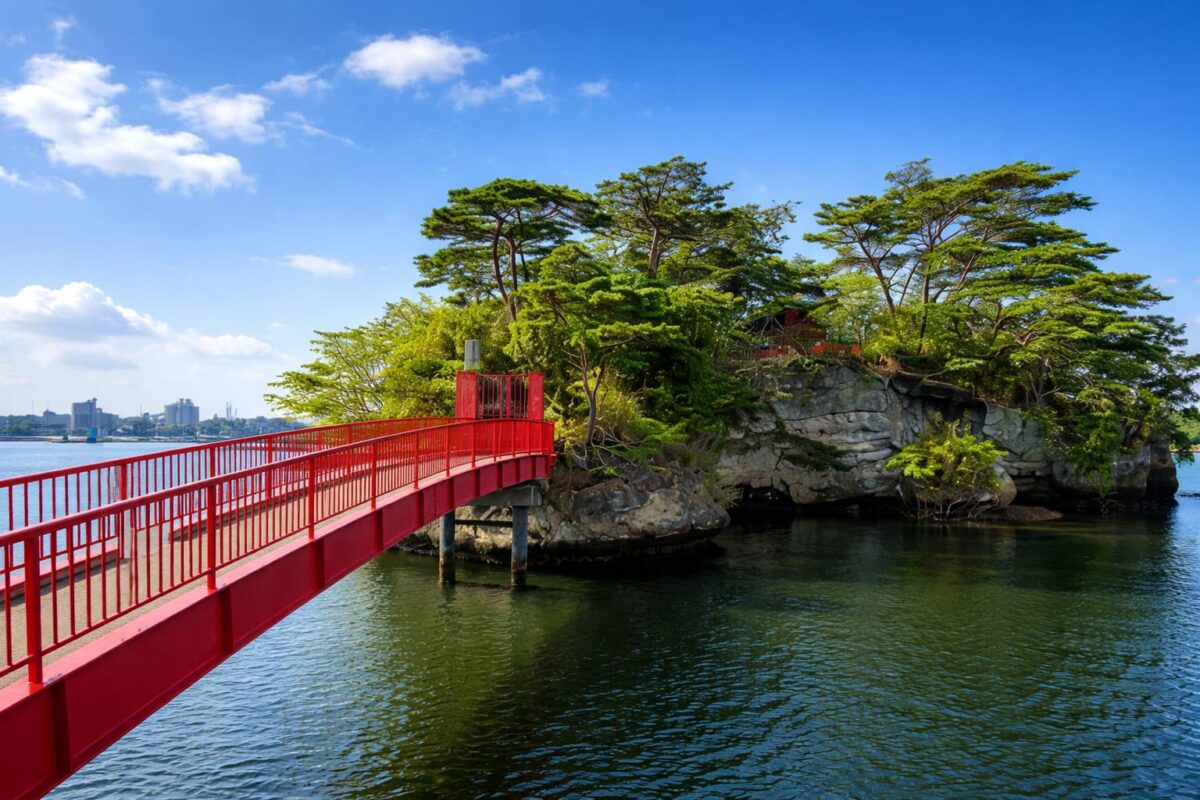
- Urato Islands – An area dotted with tranquil islands. In an environment where only the sound of the waves echoes, you can savor the sensation of time slowing down.
[geo_affi_spot]
Related Links
[geo_affi_related]
List of All Municipalities in Miyagi Prefecture
記事がありません
List of Municipalities in the Sendai Region, Miyagi Prefecture
記事がありません
List of Major Cities in Miyagi Prefecture
記事がありません