| population | 2,146 peoples |
|---|---|
| area | 69.66 km² |
| population density | 30.8 peoples/km² |
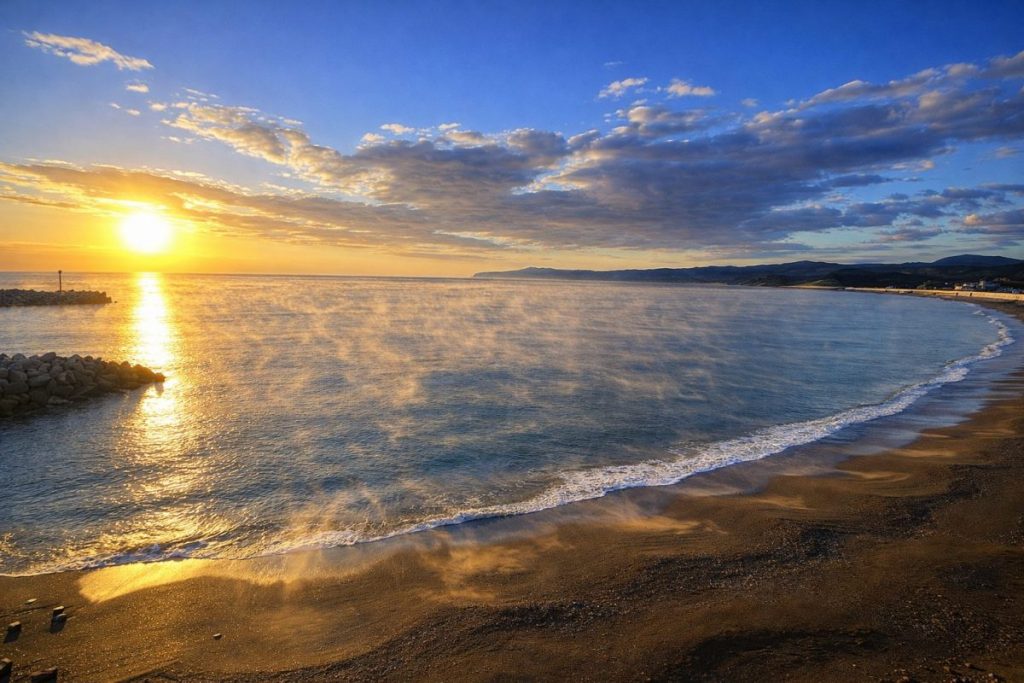
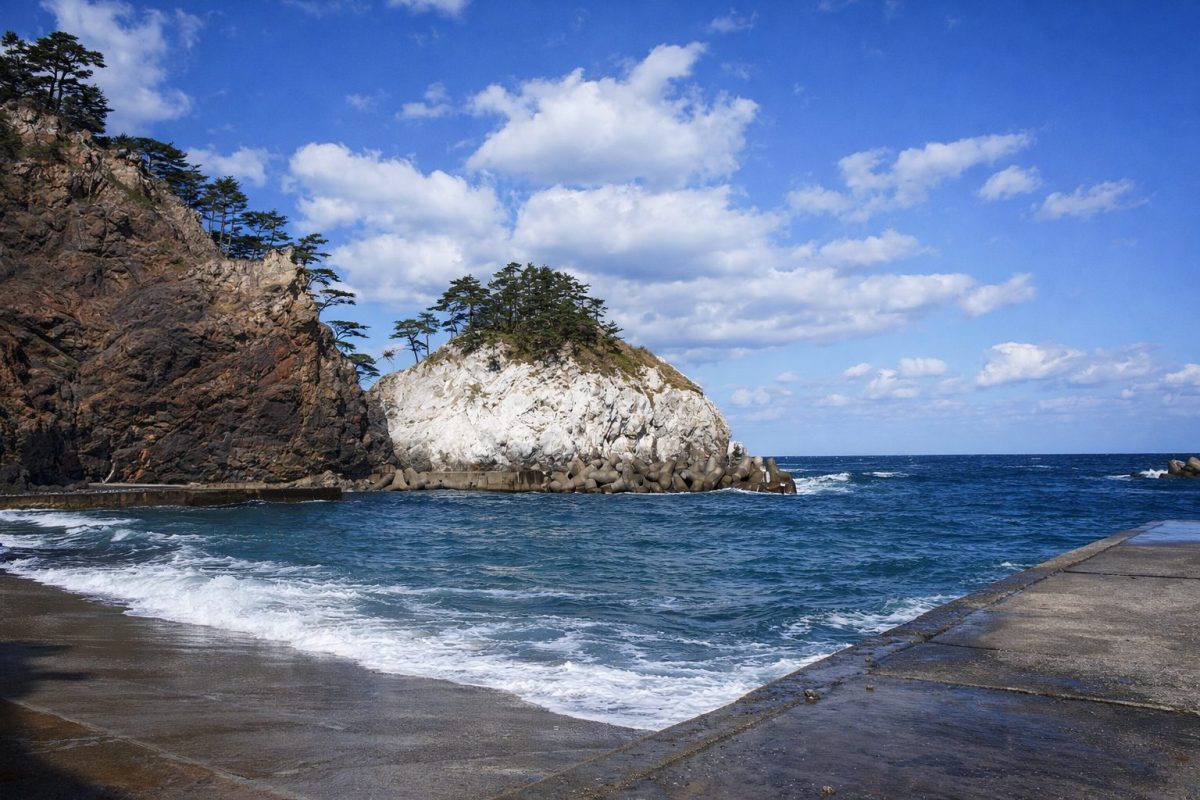
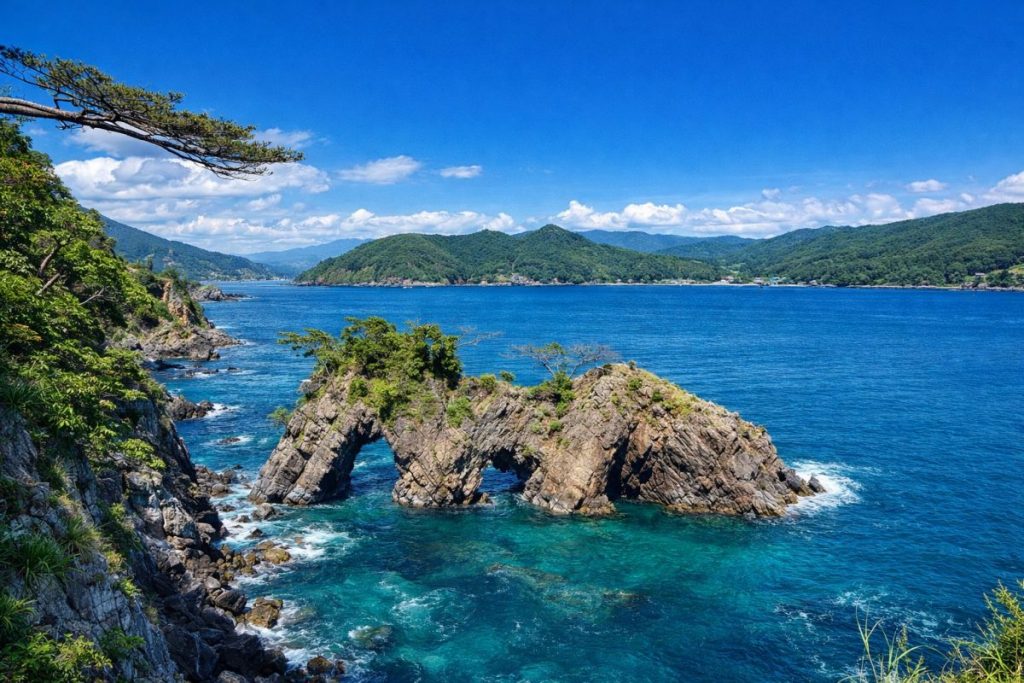
Fudai Village is a coastal municipality located in the northeastern part of Iwate Prefecture, within Shimoihei District, facing the Pacific Ocean along the Sanriku Coast. It lies on the 40th parallel north and is known as the easternmost point on Earth located on this latitude. The village features dramatic coastal scenery characterized by continuous cliffs rising over 100 meters, especially around the Kurosaki area, while inland regions consist of mountainous terrain and narrow valleys carved by rivers such as the Fudai River. Fisheries form the foundation of the local economy, and the village is also noted for its strong sense of community and disaster preparedness developed under harsh natural conditions. During the Great East Japan Earthquake of 2011, the 15.5-meter-high Fudai Floodgate and the Otanabe Seawall successfully blocked the tsunami, minimizing damage to residential areas and drawing nationwide attention. Fudai Village is widely recognized as a leading example of coexistence between nature, disaster prevention, and daily life along the Sanriku coast.
History
The history of Fudai Village is closely linked to its development as a fishing community along the Sanriku coast. In 1889, with the enforcement of the modern municipal system, Fudai Village was officially established in Kitahei District. Administrative reorganization in 1897 placed the village within Shimoihei District. Since the modern era, the local community has been shaped primarily by fisheries and forestry, with residents adapting their livelihoods to steep terrain and a cold climate. In 1961, a large wildfire spreading from a neighboring village caused serious damage, including the destruction of school facilities. In 2011, the Great East Japan Earthquake caused severe damage to coastal fishing infrastructure; however, the floodgate and seawalls constructed based on earlier foresight protected residential areas from inundation. This event remains a defining moment in the village’s history and is often cited as a symbol of the importance of long-term disaster prevention planning.
Culture and Traditions
The culture of Fudai Village has developed under geographical conditions where the sea and mountains are in close proximity. Coastal communities preserve beliefs and annual rituals connected to fishing, praying for maritime safety and abundant catches, while inland areas reflect traditions based on mountain resources. A major cultural landmark is Utori Shrine, where the traditional Utori Kagura dance is performed. This ritual has been designated an Important Intangible Folk Cultural Property of Japan. In the Kurosaki district, lighthouses and rugged cliffs form a distinctive cultural landscape that blends natural scenery with local faith and everyday life. These cultural traditions play a central role in shaping local identity and also serve as valuable tourism resources.
Local Products
-
Seafood (Sea Urchin, Abalone, Wakame Seaweed):
Marine products harvested from the nutrient-rich Sanriku fishing grounds are among Fudai Village’s most important local specialties. Natural wakame seaweed is particularly prized for its thickness and rich flavor and is distributed both within and outside the prefecture.
View fishing ports in Fudai Village -
Fresh Fish from Set-Net Fisheries:
Fixed-net fishing along the coast yields a wide variety of seasonal fish. These catches are mainly consumed locally and in nearby areas, valued for their exceptional freshness.
Horiuchi Fishing Port -
Processed Marine Products:
Processed goods such as wakame products and dried seafood are produced locally and sold at facilities like the roadside station.
Roadside Station Ao no Kuni Fudai
Living and Relocation Information
- Daily Convenience: The village center concentrates essential facilities such as the village office, post office, and local shops, providing basic services within a compact area.
- Child-Rearing Environment: The village operates its own elementary and junior high schools, offering small-class education with close teacher-student relationships.
- Medical Services: In addition to local clinics, residents have access to medical care through cooperation with hospitals in nearby cities such as Kuji.
- Housing: Residential areas are surrounded by nature, and initiatives promoting the use of vacant houses are being implemented to encourage settlement.
- Lifestyle Features: Designated as a heavy snowfall area, snow removal and winter preparedness are an essential part of everyday life.
Climate and Living Environment
- The village experiences a cold climate with significant snowfall despite its Pacific coastal location.
- Summers are cool and relatively comfortable, with few extremely hot days.
- Winters are severe, with temperatures occasionally dropping to around −15°C.
- The close proximity of coastline and mountainous terrain creates a diverse natural living environment.
Regional Characteristics (By Area)
- Fudai Area: The administrative and daily life center of the village. Fudai Station serves as the main transport hub.
- Kurosaki Area: Known for dramatic cliffs and scenic coastal views, representing the iconic landscape of the Sanriku coast. Rikuchu Kurosaki Lighthouse
- Horiuchi Area: A fishing district centered around its port and coastal settlement. Horiuchi Station
Access
- Railway: Sanriku Railway Rias Line – Fudai Station, Horiuchi Station
- Road: National Route 45 runs north–south through the village, while the Sanriku Coastal Road (Fudai IC) provides access toward Kuji City and Miyako City.
- Bus: Bus services are operated by Fudai Village and neighboring Tanohata Village, supporting local transportation and regional connectivity.
Tourist Attractions
- Fudai Beach: A sandy beach located near the mouth of the Fudai River. It is used as a swimming beach during summer and is popular among local residents.
- Rikuchu Kurosaki Lighthouse: A lighthouse standing atop coastal cliffs and selected as one of the “50 Lighthouses of Japan,” offering panoramic views of the Pacific Ocean.
- Utori Shrine: A historic shrine long worshipped by local communities and known as the venue for Utori Kagura performances.
- Roadside Station Ao no Kuni Fudai: A visitor facility offering local products, tourist information, and rest areas, serving as a key stop for travelers along the Sanriku coast.
Related Links
Iwate Major Cities
This section presents a list of major cities in Iwate Prefecture.
You can access the hub page that consolidates information on Iwate Prefecture’s major cities via the button below.
-

Which Prefecture Is Ninohe City In? [Answer] Iwate Prefecture | Complete Guide to Ninohe City (Sightseeing, Culture, Local Products & Access)
-
Which Prefecture Is Kuji City In? [Answer] Iwate Prefecture | Complete Guide to Kuji City (Sightseeing, Culture, Local Products & Access)
-
Which Prefecture Is Ofunato City In? [Answer] Iwate Prefecture | Complete Guide to Ofunato City (Sightseeing, Culture, Local Products & Access)
-
Which Prefecture Is Miyako City In? [Answer] Iwate Prefecture | Complete Guide to Miyako City (Sightseeing, Culture, Local Products & Access)
-
Which Prefecture Is Kamaishi City In? [Answer] Iwate Prefecture | Complete Guide to Kamaishi City (Sightseeing, Culture, Local Products & Access)
-
Which Prefecture Is Kitakami City In? [Answer] Iwate Prefecture | Complete Guide to Kitakami City (Sightseeing, Culture, Local Products & Access)
-
Which Prefecture Is Hanamaki City In? [Answer] Iwate Prefecture | Complete Guide to Hanamaki City (Sightseeing, Culture, Local Products & Access)
-
Which Prefecture Is Ichinoseki City In? [Answer] Iwate Prefecture | Complete Guide to Ichinoseki City (Sightseeing, Culture, Local Products & Access)
-
Which Prefecture Is Oshu City In? [Answer] Iwate Prefecture | Complete Guide to Oshu City (Sightseeing, Culture, Local Products & Access)
-
Which Prefecture Is Morioka City In? [Answer] Iwate Prefecture | Complete Guide to Morioka City (Sightseeing, Culture, Local Products & Access)
Northern Coastal Regional Development Bureau
This section shows the municipalities within the Kenpoku Regional Development Bureau of Iwate Prefecture.
Click the button to visit the hub page that brings together all municipalities in the Kenpoku region.
-
Which Prefecture Is Kunohe Village In? [Answer] Iwate Prefecture | Complete Guide to Kunohe Village (Sightseeing, Culture, Local Products & Access)
-
Which Prefecture Is Karumai Town In? [Answer] Iwate Prefecture | Complete Guide to Karumai Town (Sightseeing, Culture, Local Products & Access)
-
Which Prefecture Is Hirono Town In? [Answer] Iwate Prefecture | Complete Guide to Hirono Town (Sightseeing, Culture, Local Products & Access)
-
Which Prefecture Is Noda Village In? [Answer] Iwate Prefecture | Complete Guide to Noda Village (Sightseeing, Culture, Local Products & Access)
-
Which Prefecture Is Ichinohe Town In? [Answer] Iwate Prefecture | Complete Guide to Ichinohe Town (Sightseeing, Culture, Local Products & Access)
-
Which Prefecture Is Ninohe City In? [Answer] Iwate Prefecture | Complete Guide to Ninohe City (Sightseeing, Culture, Local Products & Access)
-
Which Prefecture Is Kuji City In? [Answer] Iwate Prefecture | Complete Guide to Kuji City (Sightseeing, Culture, Local Products & Access)