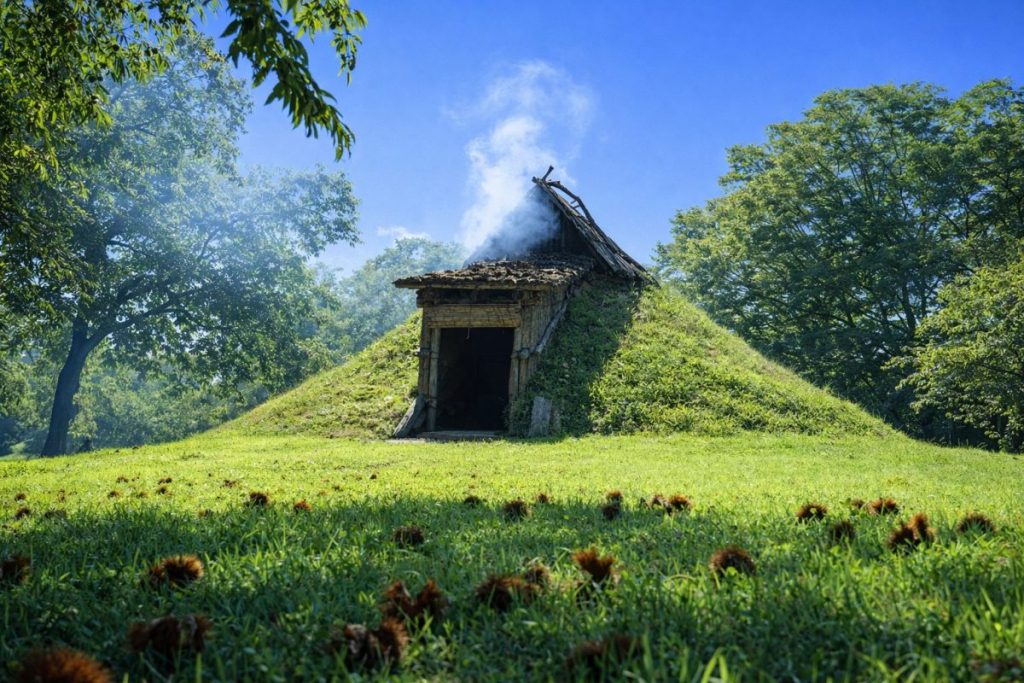
| population | 22,842 peoples |
|---|---|
| area | 420.42 km² |
| population density | 54.3 peoples/km² |
Ninohe City is located in the northernmost inland area of Iwate Prefecture, Japan, and serves as a central urban hub of the prefecture’s northern region. Situated between the Ōu Mountains to the west and the Kitakami Highlands to the east, the city has developed along the Mabuchi River, which flows from south to north through the central area. This combination of mountains, river basins, and plains has shaped a landscape where agriculture and residential areas coexist in balance.
Historically centered on the former town of Fukuoka, Ninohe prospered as a key point along the Ōshū Kaidō highway. Today, it remains an important transportation node with access to the Tōhoku Shinkansen and regional railway lines. Together with neighboring municipalities such as Ichinohe Town, Kunohe Village, and Karumai Town, Ninohe forms part of the wider “Cassiopeia Region,” functioning as an administrative, economic, and cultural core of northern Iwate. The city is valued for its calm living environment, combining rich natural surroundings with essential urban functions.
History
The area around present-day Ninohe City has been inhabited since the Jōmon period, with archaeological evidence indicating long-standing human settlement. In ancient times, the region was home to the Emishi people, particularly a group known as the Nisattai. During the early Heian period, the influence of the central government expanded into the area, and historical records mention military campaigns led by imperial generals.
From the medieval period onward, Ninohe came under the control of the Nanbu clan, and the region played a notable role in regional history, including events such as the Kunohe Rebellion at the end of the Sengoku period. During the Edo period, Fukuoka developed as a post town along the Ōshū Kaidō, supporting travel and commerce. After the Meiji Restoration and administrative reforms, the area became part of Iwate Prefecture. In 1972, the former Fukuoka Town merged with Kintaichi Village to form the old Ninohe City, and in 2006 it further merged with Jōbōji Town, creating the current municipal boundaries. Through these transitions, Ninohe has preserved its historical heritage while adapting to modern administrative and social structures.
Culture and Traditions
The culture of Ninohe City has been shaped by its inland northern climate and agricultural traditions. Local festivals and seasonal events continue to be held in various districts, reflecting strong community ties rooted in village life. One of the city’s cultural landmarks is Tendaiji Temple, a historic Buddhist temple that has long served as a spiritual center for the region.
In addition, civic and cultural activities are promoted through facilities such as “Nanyato” (Cassiopeia Messe Nanyato), which functions as a hub for exhibitions, performances, and tourism information. The culture of mutual support developed in response to harsh winters and heavy snowfall remains evident in daily life, contributing to a strong sense of local identity and resilience among residents.
Local Products
-
Jōbōji Lacquerware (Jōbōji Urushi):
Produced mainly in the Jōbōji area, this natural lacquer is one of Japan’s most renowned domestic lacquer products. It is widely used in the restoration of cultural properties and in traditional crafts.
Tekiseisha (Jōbōji Lacquer Center) -
Grains and Millet:
Traditional grains such as millet and foxtail millet are cultivated in the cool climate and are valued as healthy food ingredients.
Millet-producing areas around Ninohe -
Rice:
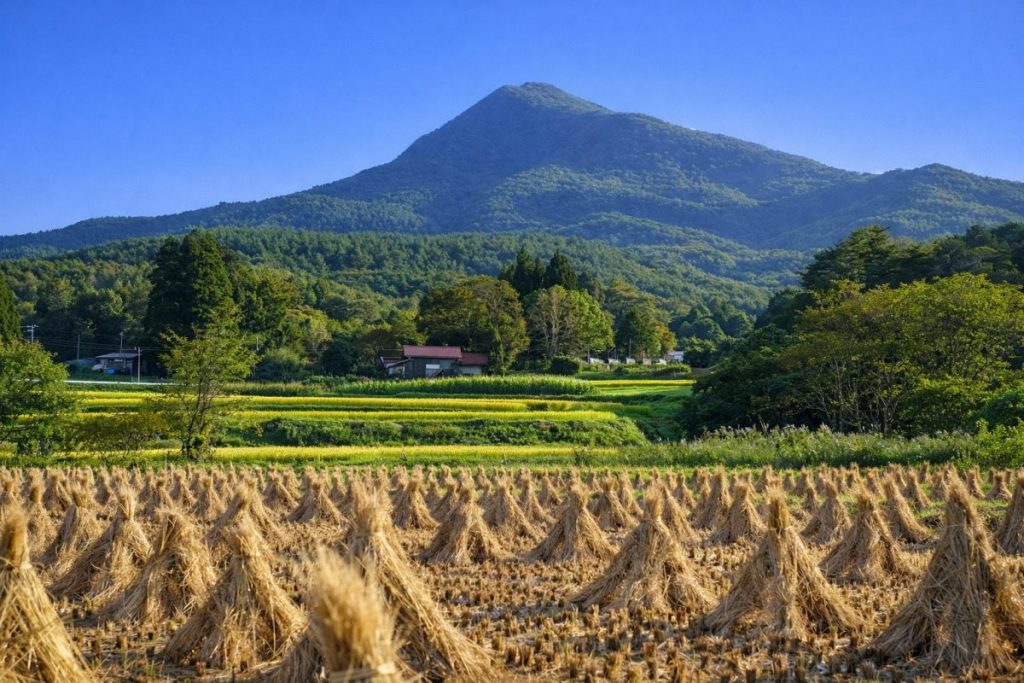
Rice cultivation is carried out in the fertile areas along the Mabuchi River, supplying stable-quality rice mainly for local consumption.
Rice paddies in Ninohe -
Processed Agricultural Products:
Pickles and other processed foods made from locally grown produce are sold at roadside stations and local markets, popular as regional specialties.
Nanyato
Living and Relocation Information
- Daily Convenience: Commercial facilities, medical institutions, and government offices are concentrated around Ninohe Station, allowing residents to meet daily needs within a compact area.
- Child-Rearing Environment: Multiple elementary and junior high schools operate within the city, offering a community-oriented educational environment with ample opportunities for nature-based activities.
- Medical Services: In addition to local clinics and hospitals, Ninohe functions as a medical center for the northern Iwate region. Details are available on the official Ninohe City website.
- Housing: Residential areas mainly consist of detached houses, with relatively stable land prices and a calm living environment.
- Lifestyle Characteristics: Heavy snowfall requires winter preparation, but organized snow removal systems support safe daily life throughout the season.
Climate and Living Environment
- An inland continental climate with large temperature differences between summer and winter.
- Cold winters with heavy snowfall.
- Relatively cool summers with few extremely hot days.
- Mountain ranges and river landscapes define everyday scenery and living conditions.
Area Characteristics (By District)
- Former Fukuoka Area: The administrative and commercial center of the city, developed around Ninohe Station.
- Kintaichi Area: Known for its hot spring resort, centered on Kintaichi Onsen.
- Jōbōji Area: A rural district with extensive forests and farmland, noted for traditional lacquer production.
Access
-
Railway:
Tōhoku Shinkansen: Ninohe Station
IGR Iwate Galaxy Railway Line: Ninohe Station – Tomai Station – Kintaichi-Onsen Station - Road: National Route 4, Hachinohe Expressway (Jōbōji IC)
- Bus: Services operated by JR Bus Tōhoku and Iwate Kenpoku Bus.
Tourist Attractions
- Kunohe Castle Ruins — A nationally designated historic site from the Sengoku period.
- Kintaichi Onsen — One of the representative hot spring areas of northern Iwate.
- Tendaiji Temple — A historic Buddhist temple with deep cultural significance.
Related Links
Iwate Major Cities
This section presents a list of major cities in Iwate Prefecture.
You can access the hub page that consolidates information on Iwate Prefecture’s major cities via the button below.
-

Which Prefecture Is Ninohe City In? [Answer] Iwate Prefecture | Complete Guide to Ninohe City (Sightseeing, Culture, Local Products & Access)
-
Which Prefecture Is Kuji City In? [Answer] Iwate Prefecture | Complete Guide to Kuji City (Sightseeing, Culture, Local Products & Access)
-
Which Prefecture Is Ofunato City In? [Answer] Iwate Prefecture | Complete Guide to Ofunato City (Sightseeing, Culture, Local Products & Access)
-
Which Prefecture Is Miyako City In? [Answer] Iwate Prefecture | Complete Guide to Miyako City (Sightseeing, Culture, Local Products & Access)
-
Which Prefecture Is Kamaishi City In? [Answer] Iwate Prefecture | Complete Guide to Kamaishi City (Sightseeing, Culture, Local Products & Access)
-
Which Prefecture Is Kitakami City In? [Answer] Iwate Prefecture | Complete Guide to Kitakami City (Sightseeing, Culture, Local Products & Access)
-
Which Prefecture Is Hanamaki City In? [Answer] Iwate Prefecture | Complete Guide to Hanamaki City (Sightseeing, Culture, Local Products & Access)
-
Which Prefecture Is Ichinoseki City In? [Answer] Iwate Prefecture | Complete Guide to Ichinoseki City (Sightseeing, Culture, Local Products & Access)
-
Which Prefecture Is Oshu City In? [Answer] Iwate Prefecture | Complete Guide to Oshu City (Sightseeing, Culture, Local Products & Access)
-
Which Prefecture Is Morioka City In? [Answer] Iwate Prefecture | Complete Guide to Morioka City (Sightseeing, Culture, Local Products & Access)
Northern Coastal Regional Development Bureau
This section shows the municipalities within the Kenpoku Regional Development Bureau of Iwate Prefecture.
Click the button to visit the hub page that brings together all municipalities in the Kenpoku region.
-
Which Prefecture Is Kunohe Village In? [Answer] Iwate Prefecture | Complete Guide to Kunohe Village (Sightseeing, Culture, Local Products & Access)
-
Which Prefecture Is Karumai Town In? [Answer] Iwate Prefecture | Complete Guide to Karumai Town (Sightseeing, Culture, Local Products & Access)
-
Which Prefecture Is Hirono Town In? [Answer] Iwate Prefecture | Complete Guide to Hirono Town (Sightseeing, Culture, Local Products & Access)
-
Which Prefecture Is Noda Village In? [Answer] Iwate Prefecture | Complete Guide to Noda Village (Sightseeing, Culture, Local Products & Access)
-
Which Prefecture Is Ichinohe Town In? [Answer] Iwate Prefecture | Complete Guide to Ichinohe Town (Sightseeing, Culture, Local Products & Access)
-
Which Prefecture Is Ninohe City In? [Answer] Iwate Prefecture | Complete Guide to Ninohe City (Sightseeing, Culture, Local Products & Access)
-
Which Prefecture Is Kuji City In? [Answer] Iwate Prefecture | Complete Guide to Kuji City (Sightseeing, Culture, Local Products & Access)